Digital Laser Measuring Tool Explained: A UK Buyer's Guide
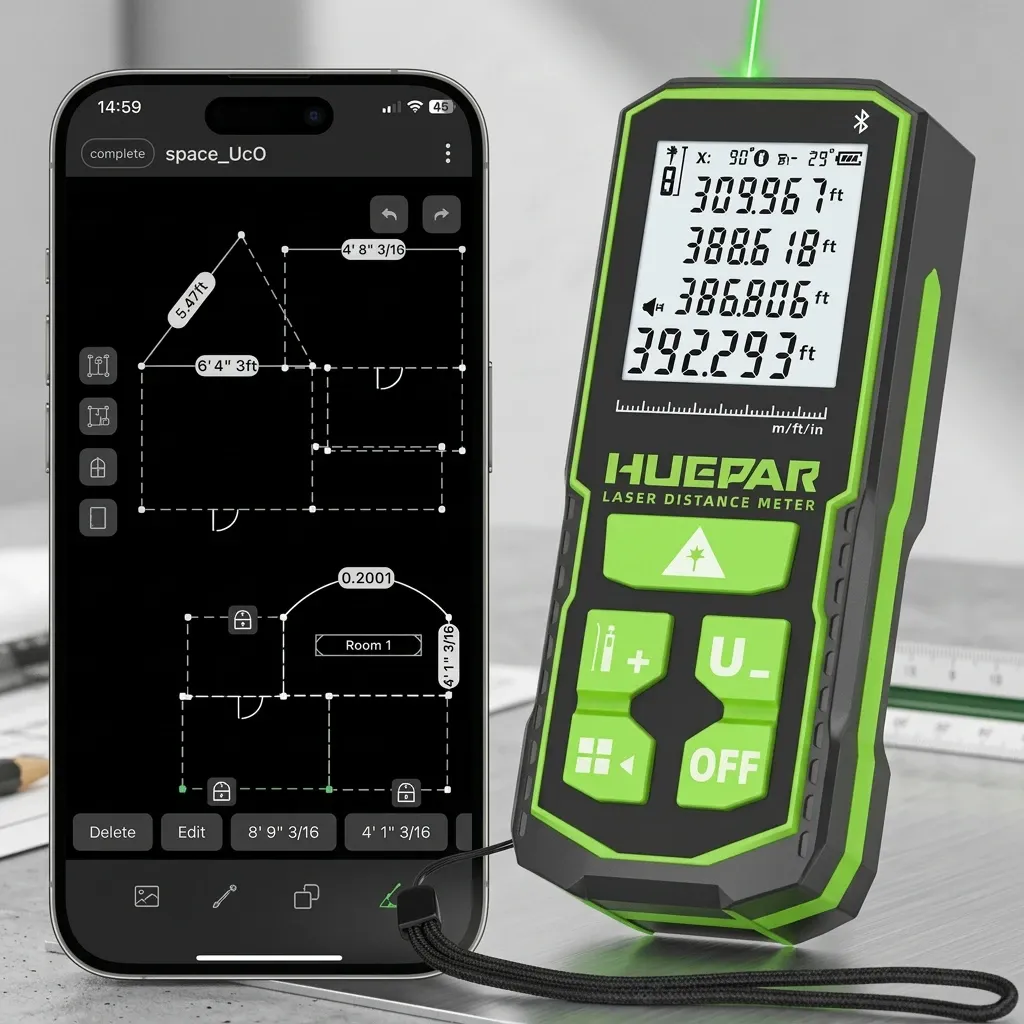
Digital Laser Measuring Tool Explained: A UK Buyer's Guide
A digital laser measuring tool is a handheld device that uses a laser beam to measure distance quickly and accurately, making it easier than a tape measure to size rooms, ceilings, garden spans and renovation areas. For UK tradespeople, estate agents and home renovators, it is mainly used to save time, improve consistency and make one-person measuring far more practical.
TL;DR: A digital laser measuring tool helps you measure distances faster and more accurately than a traditional tape, especially indoors across rooms, hallways and awkward spaces. Based on our testing of green-beam measuring devices in typical UK homes and work settings, the best options are easy to read, accurate, durable and visible in bright indoor light. If you regularly quote jobs, prepare room dimensions or plan home improvements, a reliable laser meter can reduce repeat visits and measuring mistakes.
Greendista’s core promise is simple: precise measuring with a highly visible green beam, built for real UK working conditions. So, whether you are choosing your first device or replacing an ageing meter, this guide explains what a digital laser measuring tool does, how it works, what features matter in Britain, and how to buy with confidence.
Key Takeaways
- A digital laser measuring tool uses a laser beam to calculate distance quickly and accurately, often with extra functions such as area, volume and continuous measurement.
- For UK users, green beam visibility is especially useful indoors in bright daylight, on active sites and during property viewings.
- Models with up to 120m range suit many trade, surveying-lite and renovation tasks without stepping up to specialist surveying equipment.
- Key buying points include accuracy tolerance, beam visibility, battery system, durability rating, display readability and ease of use.
- A quality tool can help reduce wasted time on remeasuring and improve consistency in quotes, floorplans and fit-out planning.
What is a digital laser measuring tool?
A digital laser measuring tool is a handheld device that measures distance by sending out a laser beam to a target surface and calculating the return. The result appears on a screen in seconds. Most units also offer functions beyond simple point-to-point distance measurement, including area calculations for flooring or painting jobs, volume calculations for rooms, and Pythagorean modes for indirect height measurement where direct access is awkward.
In practical terms, it replaces much of the manual effort involved in pulling out a tape across long rooms, stairwells or external elevations. As a result, it is particularly useful where one person needs to measure alone or where furniture, uneven ground or access limitations make tape measurements cumbersome.
If you are comparing formats and capabilities, our detailed pillar guide on the Huepar S120-G in the UK explains how a modern green-beam meter fits into everyday professional use.
How does a digital laser measuring tool work?
The basic principle
The device emits a laser towards a surface such as a wall. It then calculates the distance based on the time taken for the signal to return. The result is displayed digitally in metres, millimetres, feet or inches depending on settings.
Why reference points matter
Most devices allow measurement from different reference points such as the front edge or rear edge of the unit. This matters when you are taking measurements from skirting boards, corners or fixed surfaces. In fact, misunderstanding the reference point is one of the most common causes of inaccurate readings for new users.
What built-in calculation modes do
Area mode can multiply length by width automatically for floor coverings or paint estimates. Volume mode helps with room sizing for planning storage or heating considerations. Continuous mode updates measurements as you move closer or farther from a surface. Indirect modes can estimate height where direct line-of-meas blocked at floor level.
Why green beam visibility matters
Greendista’s headline product story centres on green beam clarity for good reason. Green lasers are generally easier for the human eye to see than red lasers in many indoor conditions. Therefore, for users working in brighter rooms with large windows or moving between indoor and outdoor jobs in variable British weather, better visibility can make aiming more straightforward.
Why are UK buyers switching from tape measures to laser tools?
The main appeal is efficiency. On site or between appointments, time matters. A digital laser measuring tool can record dimensions far faster than extending and retracting a long tape repeatedly across multiple rooms. For estate agents preparing room dimensions for listings, builders pricing extensions or homeowners planning kitchens and wardrobes, that speed adds up over the course of a week.
Accuracy is another strong reason. Human error creeps in when tapes sag, hook ends slip or numbers are read upside down in poor light. A good laser meter reduces those variables. However, that does not remove the need for care or checking critical dimensions before ordering materials; instead, it gives users a more consistent first reading.
There is also the benefit of solo working. Many UK tradespeople work independently or in small teams. Measuring across larger spaces often needs two people with a tape; by contrast, a laser device can make one-person measurement realistic on many tasks.
Who should use a digital laser measuring tool?
Builders and fit-out trades
Builders use these tools for room sizing, stud layouts, ceiling heights and materials estimating. Carpenters and kitchen fitters benefit when checking alcoves, openings and installed dimensions before cutting or ordering components. If your work involves regular quoting across domestic properties, speed plus repeatable readings can improve workflow noticeably.
Estate agents and property professionals
Property listings depend on clear room dimensions. A digital laser measuring tool helps agents collect room data quickly during tight appointment windows without stretching tapes around furniture. It is also useful when confirming whether spaces meet buyer expectations for beds, desks or storage units.
Home renovators
If you are planning flooring, fitted wardrobes, blinds or paint quantities at home, this kind of device removes much of the frustration from taking room measurements alone. It is especially handy in older British housing stock where room shapes are not always neat rectangles and access around furniture may be limited.
. d. . site. support. works. they still must follow local site rules, health-and-safety procedures and any equipment restrictions. According to UK workplace guidance, tools should always be used in line with manufacturer instructions and site-specific risk assessments, particularly in occupied public buildings.\n ...\nReady to upgrade your toolkit with Greendista?
Get Yours Now — £58.31